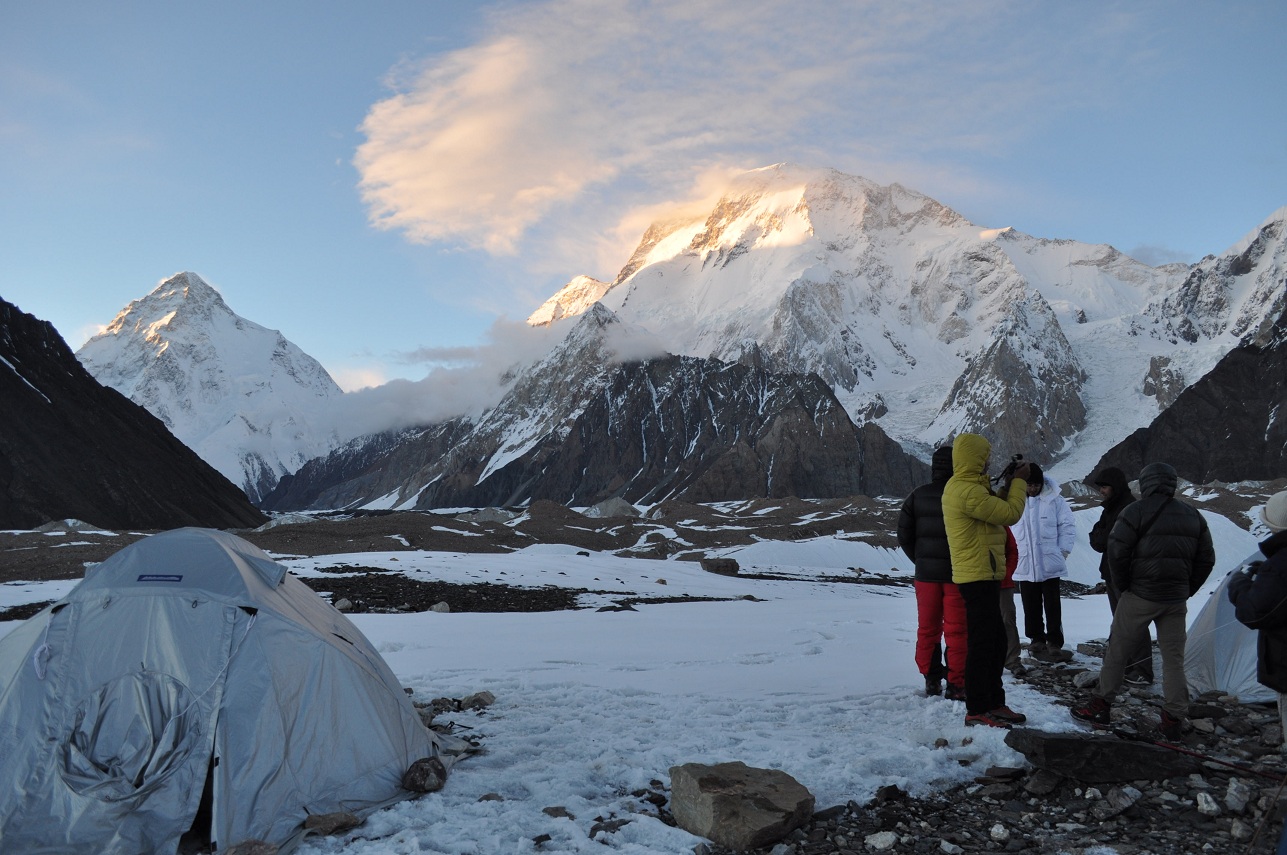

Introduction: Before K2 Had a Name
Long before modern climbing gear, satellite weather forecasts, or organized commercial expeditions, there stood a massive, unnamed pyramid deep in the Karakoram range. It did not rise gently. It did not invite. It simply stood—sharp, cold, and distant—watching silently as human curiosity slowly found its way toward it.
Today, the world knows this peak as K2 (8,611m), the second-highest mountain on Earth. But before it became famous and earned the name "The Savage Mountain," it was simply labeled on survey maps as a mysterious question mark.
The 1902 Expedition: The First Serious Attempt
The first serious attempt to climb K2 came in 1902, led by Oscar Eckenstein and Aleister Crowley. It was an expedition of pure reconnaissance—attempting to understand the massive Godwin-Austen glacier, the extreme barometric shifts, and the crumbling rock faces of the Northeast Ridge.
What they encountered shocked them: relentless storms that pinned the team down for weeks, temperatures that froze their primitive equipment, and an unrelenting vertical wall with no natural resting places. They left with a sobering realization: K2 allows no mistakes.
The Legacy of Early Exploration
Between 1902 and 1954, multiple international teams from Italy, the United States, and Britain attempted the mountain. Each attempt wrote lessons in endurance, acclimatization, and high-altitude logistics that ultimately paved the way for modern Himalayan mountaineering.